

With the evolution of working methods, more and more companies are adopting a hybrid model, combining office presence and remote working. In this context, flexible offices, offered by modern business centers and event spaces, are an ideal solution. These spaces offer agility, cost optimization, and a better experience for employees, while meeting the strategic needs of companies. But why exactly are flexible offices appealing to hybrid companies? This article explores the main reasons and concrete advantages of this choice.
Understanding the hybrid model and its requirements
Hybrid working is based on a balance between remote working and office attendance. This model allows employees to manage their time and space independently, while maintaining opportunities for in-person collaboration. However, this way of working requires infrastructure that can adapt to daily variations in the number of employees present.
Traditional offices, with assigned workstations for each employee, quickly become inefficient in this context. Flexible spaces, on the other hand, allow for modular occupancy, adjusting the number of available workstations according to needs. This not only helps reduce costs, but also maximizes the use of resources.
Flexibility and space optimization
One of the main advantages of flexible offices is the ability to adapt the space to the immediate needs of the team. Hybrid companies do not need a fixed workstation for each employee. They can therefore rent or set up modular areas that adapt to fluctuations in the number of staff present on site.
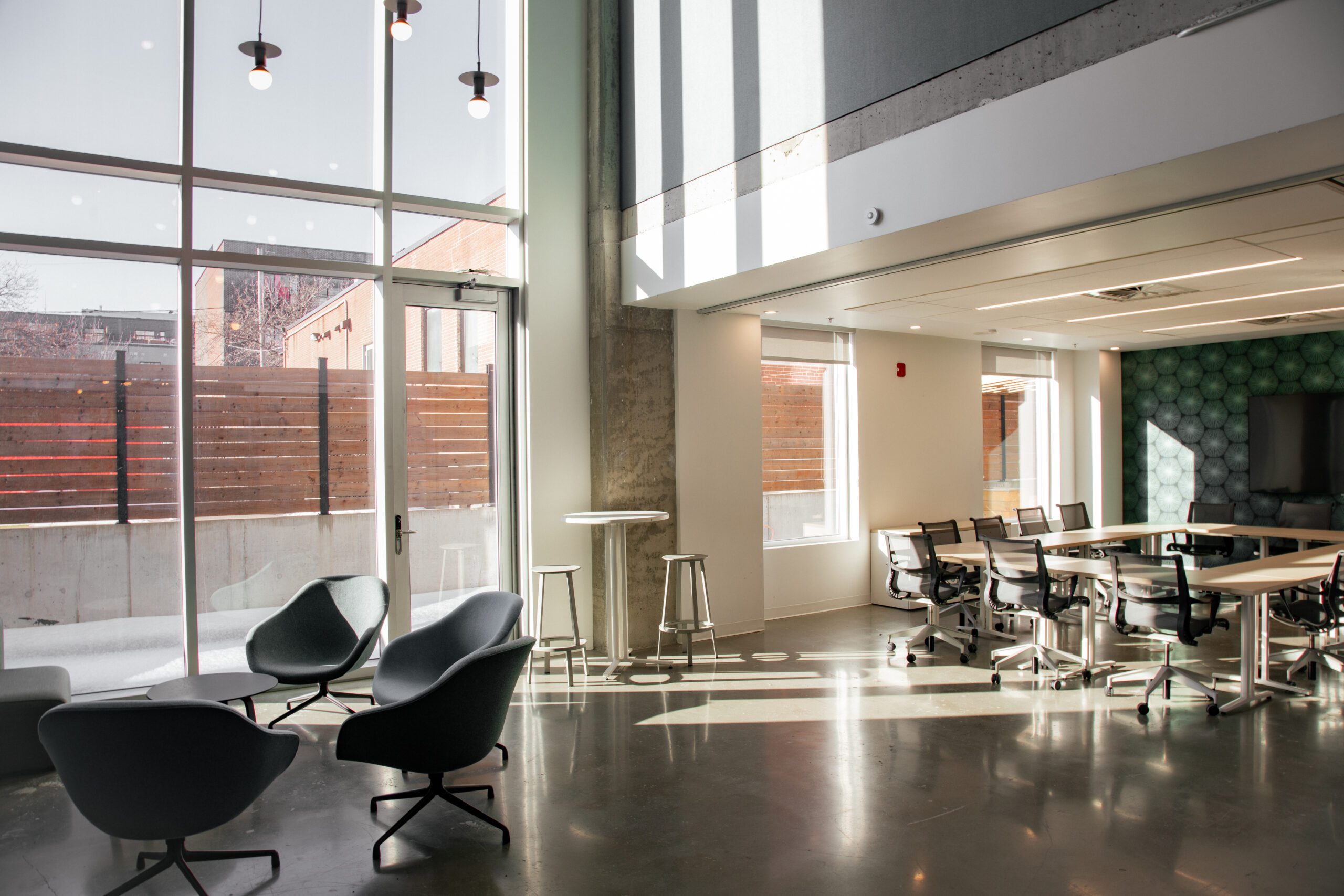
This flexibility extends not only to workstations, but also to meeting rooms and collaborative spaces. A modern business center offers a variety of configurations: conference rooms, temporary private offices, open areas, and event spaces. Each space can be used according to the activity of the day, whether it’s a strategic meeting, a workshop, or individual work time.
Cost reduction and improved budget management
For hybrid businesses, flexible offices are a smarter investment than a traditional lease. Renting flexible space means you only pay for the space you actually use. This reduces the costs associated with underutilized offices and lowers fixed expenses such as heating, electricity, and furniture.
By choosing a business center, the company also benefits from integrated services such as reception, maintenance, cleaning, and access to technological equipment. These services, included in the rental package, simplify management and allow the company to focus on its core business.
Promoting collaboration and innovation
Flexible offices don’t just optimize space: they help create a stimulating environment for hybrid teams. Modular areas encourage interaction and exchange, even for teams that are not present on a daily basis. Organizing collaborative workshops, brainstorming sessions, or ad hoc meetings becomes simpler and more efficient.
In addition, the atmosphere of a modern business center, often bright and well-designed, stimulates creativity and employee well-being. Flexible spaces allow teams to choose the environment that best suits the task at hand, whether it’s focused work or a collaborative project.
Accessibility and strategic location
For hybrid companies, office location remains a key factor. Business centers are often located in neighborhoods with good public transportation links and close to essential services, making them easily accessible for all employees. This accessibility helps boost attendance on office days and improves the overall employee experience.
The strategic location of flexible offices is also an asset for companies that want to receive clients, organize meetings, or host events. A high-quality business center offers a professional and rewarding environment that reflects the company’s image.
Technology integration and support for hybrid teams
Modern flexible offices incorporate advanced technological solutions to meet the needs of hybrid teams. Fast internet connections, videoconferencing tools, online booking systems, and audiovisual equipment enable teams to work efficiently, whether they are on-site or remote.
This technological integration reduces the friction associated with hybrid working, facilitates communication, and maintains high levels of productivity. In addition, business centers often offer on-site technical support, ensuring that workdays and professional events run smoothly.
Promoting employee well-being and engagement
Flexible offices are not limited to the workspace: they contribute to the well-being of teams. The ability to choose where and how to work, to enjoy relaxation areas or to collaborate in a pleasant environment increases employee satisfaction and engagement.
For hybrid companies, this advantage is crucial. Maintaining motivation and team cohesion becomes a challenge when some employees work remotely several days a week. A well-designed business center offers a professional, comfortable, and flexible environment that encourages interaction and strengthens the sense of belonging.
Flexibility as a strategic lever
Adopting flexible offices for hybrid teams is not just an operational choice: it is a strategic decision. It allows you to adapt quickly to change, optimize resources, strengthen collaboration, and improve employee satisfaction. Companies that integrate this flexibility into their organization enjoy a competitive advantage, both in terms of internal management and professional image.
In addition, combining flexible offices with event spaces or business centers allows daily work and one-off events to be held in the same location, offering greater consistency and efficiency.
Conclusion
Flexible offices are a suitable solution for hybrid companies seeking agility, efficiency, and well-being for their teams. Their modularity, the ability to adapt the space to needs, integrated services, and strategic location make them an advantageous alternative to traditional offices. By choosing flexible spaces within modern business centers, companies can not only optimize their costs and improve the employee experience, but also strengthen their image and overall performance. Hybrid working thus becomes more fluid, collaborative, and stimulating, while remaining aligned with the company’s strategic objectives.