
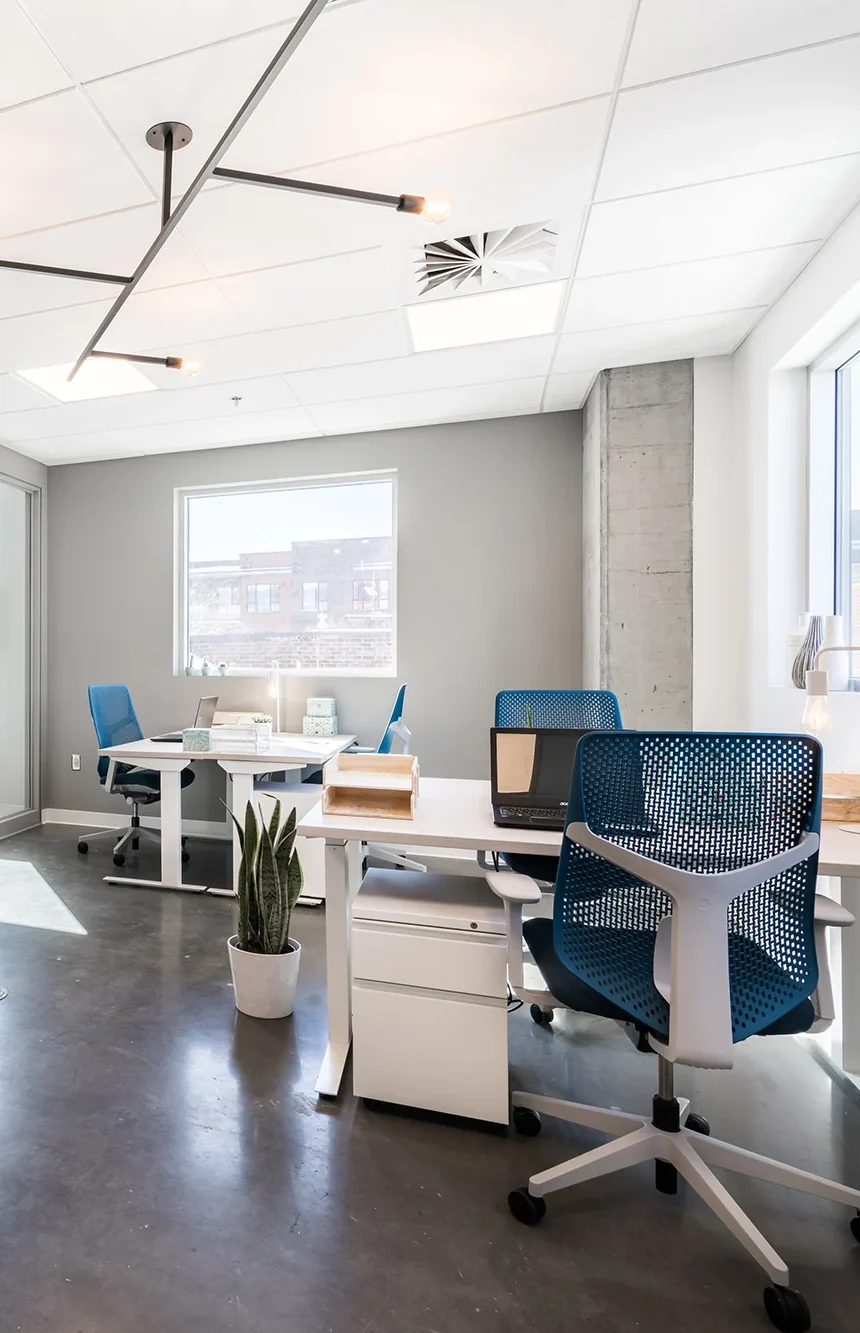
Working practices have changed profoundly in recent years. Partial remote working, hybrid teams, rapid growth, and periods of transition are now part of everyday life for many companies. In this context, traditional offices, which are rigid and often restrictive, are struggling to meet new expectations. Today’s companies are looking for solutions that can adapt to their reality, their pace, and their ambitions. It is in this changing landscape that flexible spaces, integrated into modern business centers, come into their own.
In Montreal, Espaces Waverly is part of this new vision of work, offering professional environments designed to evolve with businesses, rather than locking them into fixed models.
Understanding the evolution of the traditional office
For a long time, the office was synonymous with stability: a fixed location, a multi-year commercial lease, high costs, and an organization that was difficult to change. This model suited companies whose structure and workforce changed little. Today, this reality is increasingly rare.
Modern businesses have to deal with faster economic cycles, temporary projects, teams that grow or shrink, and employees who no longer necessarily all work in the same place or at the same times. In this context, committing to a rigid lease can become a strategic hindrance.
Flexible spaces respond precisely to this need for flexibility. They allow companies to have a professional environment without the administrative, financial, and logistical burdens associated with a traditional office.
What is a flexible business center?
A flexible business center is much more than just an office building. It is a place designed as a comprehensive professional platform, capable of meeting a wide variety of needs.
It usually includes:
-
private or shared offices, adaptable to the size of the teams;
-
fully equipped meeting rooms available as needed;
-
common areas that encourage interaction and collaboration;
-
integrated services that simplify everyday business operations;
-
multipurpose spaces that can host professional events.
Unlike a simple rented office, a flexible business center offers a comprehensive approach to work. The company no longer has to worry about layout, service management, or maintenance. It can focus on its core business while benefiting from a high-quality professional environment.

Flexibility as a strategic lever
Flexibility is no longer a secondary advantage: it has become a real performance driver. For a company, being able to adjust its workspace according to its actual needs represents a considerable gain, both financially and organizationally.
Flexible spaces allow, for example:
-
to quickly increase or reduce the number of workstations;
-
to rent an office for a period of time suited to a specific project;
-
access meeting rooms only when necessary;
-
avoid the costs associated with underutilized space.
This agility is particularly valuable for SMEs, growing companies, project teams, or organizations undergoing transition. It helps limit risks while maintaining a consistent and rewarding professional environment.
Business centers and professional image
The address and working environment play an important role in how a company is perceived. Receiving clients or partners in a well-maintained, well-located, and functional environment contributes directly to the brand image.
Modern business centers offer spaces designed to reflect the professionalism and credibility of the companies that occupy them. Elegant meeting rooms, well-appointed common areas, structured reception: every detail contributes to creating a positive experience, both for internal teams and external visitors.
For many companies, this represents an ideal alternative to traditional offices, which are often costly to set up and difficult to maintain at the same level of quality over the long term.
A work environment designed for well-being
A company’s performance is closely linked to the well-being of its teams. Flexible spaces within business centers pay particular attention to this aspect.
Natural light, smooth traffic flow, relaxation areas, quiet or collaborative work zones: everything is designed to promote concentration, reduce stress, and encourage quality interactions.
Unlike closed and sometimes isolating offices, these environments offer a variety of spaces suited to different times of the day: individual work, meetings, informal discussions, or breaks necessary to maintain a good balance.
Flexible spaces and collaboration
One of the major advantages of business centers is their ability to promote collaboration, both within teams and between the various companies present.
Sharing a space with other professionals from various sectors creates an environment conducive to exchanges, new ideas, and business opportunities. Without being intrusive, these interactions can become a source of inspiration and growth.
For companies that want to evolve in a dynamic environment without losing their identity or autonomy, flexible spaces offer the right balance between independence and openness.
A solution tailored to hybrid realities
Hybrid working has become the norm for many organizations. Employees alternate between working from home and being in the office, which is profoundly changing space requirements.
In this context, maintaining large permanent offices is no longer always relevant. Flexible business centers allow for a rethinking of how space is used: fewer fixed workstations, but spaces that are better suited to moments of collective presence.
Team meetings, collaborative work sessions, client meetings: the office becomes a focal point rather than a mandatory daily destination. This approach promotes smarter use of resources while maintaining a strong sense of belonging.
Business centers and simplified management
One of the often underestimated advantages of business centers is that they simplify day-to-day management. With services included, ready-to-use infrastructure, and on-site support, everything is designed to reduce the administrative burden on businesses.
Rather than managing multiple suppliers, contracts, and unforeseen events, companies benefit from a centralized solution. This simplification frees up time and energy, which can be reinvested in business development.
For managers and administrative teams, this peace of mind is a major asset.
Integrated event spaces
Flexible business centers are increasingly incorporating spaces dedicated to professional events. Conferences, training sessions, workshops, product launches, or client meetings: these venues allow you to organize events without having to look for an external space.
This integration provides a natural continuity between daily work and key moments in the life of the company. It also facilitates logistics, while ensuring a consistent and professional environment.
For companies, this represents an opportunity to strengthen their visibility, internal culture, and business relationships, directly from their workplace.
A tailored solution for businesses of all sizes
Contrary to popular belief, business centers and flexible workspaces are not just for freelancers or small businesses. They are equally suitable for established companies, corporate teams, and rapidly growing organizations.
Every company can find a suitable configuration here: private offices, space for an entire team, rooms dedicated to specific projects, or temporary spaces to support a growth phase.
This adaptability makes flexible business centers a relevant long-term solution, capable of evolving alongside the company.
Waverly Spaces: a modern vision of the business center
In this constantly evolving landscape, Espaces Waverly embodies a contemporary approach to business centers. The goal is not simply to offer office space, but to create flexible, functional professional environments that are aligned with the realities of today’s workplace.
Each space is designed to offer a seamless experience, where flexibility goes hand in hand with professionalism, and where companies can plan for the long term without unnecessary constraints.
Conclusion
Flexible spaces integrated into business centers now offer a concrete response to the challenges faced by modern companies. They provide a credible and strategic alternative to traditional offices, combining agility, services, high-quality environments, and ease of management.
In a context where adaptability has become essential, choosing a flexible business center means choosing a workspace that can evolve at the same pace as the company. It also means investing in a professional environment that supports performance, well-being, and long-term growth.