The way we work is changing rapidly. Companies are no longer just looking for offices, but for real living and moving environments where their teams can perform while feeling good. In this context, the link between physical activity and productivity has become a central issue. Science is unanimous: moving regularly during the workday improves concentration, reduces stress, stimulates creativity, and increases the quality of work. Yet many employees remain seated for hours, confined to spaces that are not conducive to movement.
This is where flexible, multifunctional spaces like Espaces Waverly come into play, offering more than just a place to set up a computer, but an environment designed to encourage better physical health, energy, and productivity. This article takes an in-depth look at how integrating movement into the workplace can truly transform team performance, and why companies are embracing this approach in droves.
The link between movement and cognitive performance
Science has long studied the impact of physical activity on the brain. Several studies show that even light physical exertion increases blood flow and oxygenation to the brain, which improves concentration, working memory, and decision-making. Contrary to what one might think, it is not necessary to do an intense workout to feel the benefits. Ten minutes of walking or a few simple exercises are enough to stimulate the areas of the brain responsible for attention and focus.
Neuroscientists often refer to movement as a “cognitive activator.” When we move, the brain releases neurotransmitters such as dopamine, serotonin, and norepinephrine, which improve motivation, mood, and mental clarity. This is one of the reasons why ideas seem to flow more easily after a brisk walk or some time spent outdoors.
In a world where employees juggle meetings, projects, and constant notifications, these moments of cognitive activation become a powerful tool for regaining a state of deep and sustained concentration. A workspace that allows—and encourages—natural movement therefore becomes a natural advantage for businesses.
The power of active breaks in reducing stress
Work-related stress is not only mental; it also manifests itself physically. Prolonged static posture increases muscle tension, eye strain, neck and lower back pain, which fuels a cycle of continuous stress. Physical activity acts as a natural stress regulator by reducing cortisol (the stress hormone) and promoting the production of endorphins.
Numerous studies show that incorporating regular active breaks—even very short ones—can reduce perceived stress by up to 40%. Simply climbing stairs, doing a few stretches, or taking a short walk can be enough to release built-up pressure and reset your emotional state.
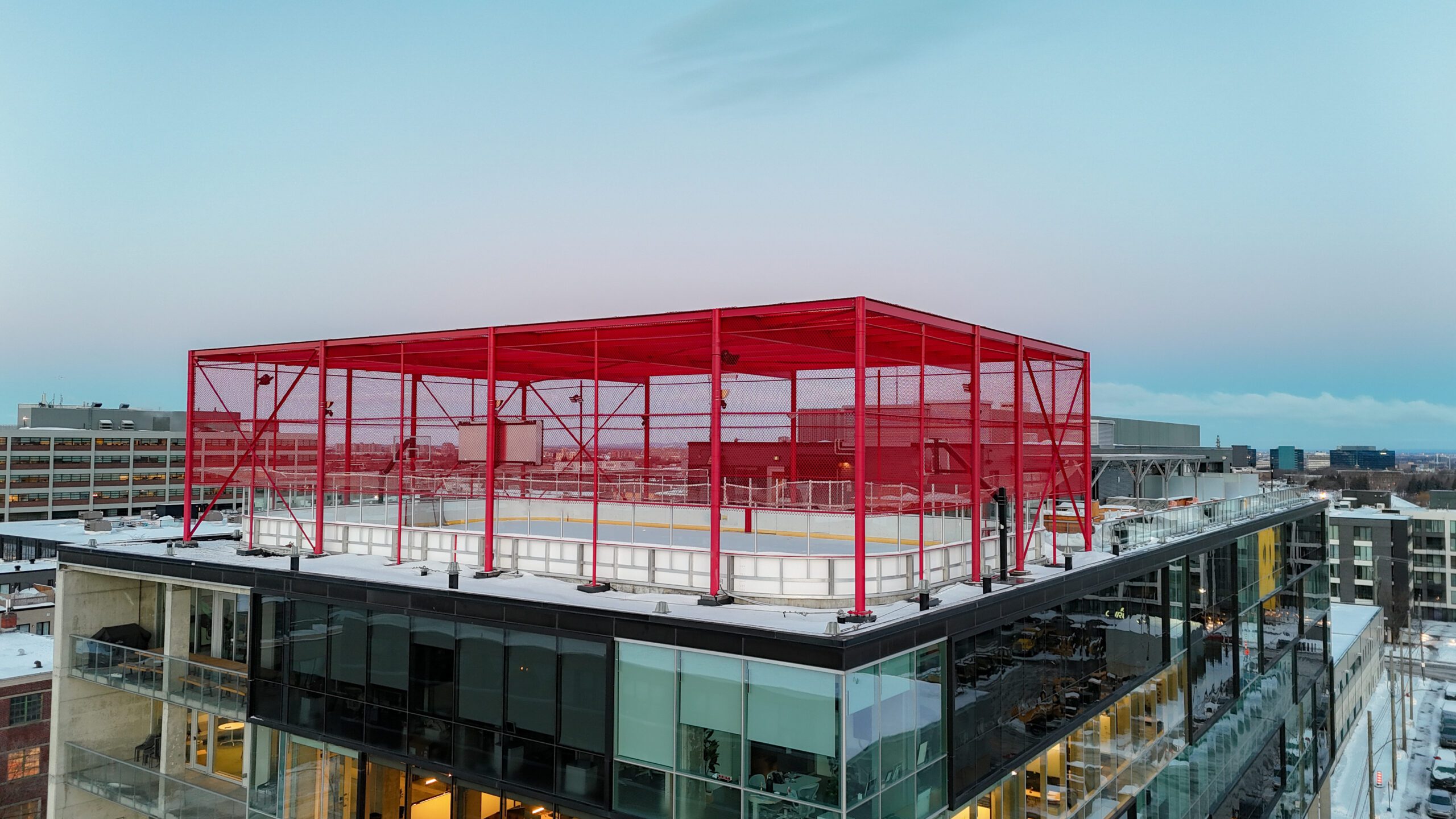
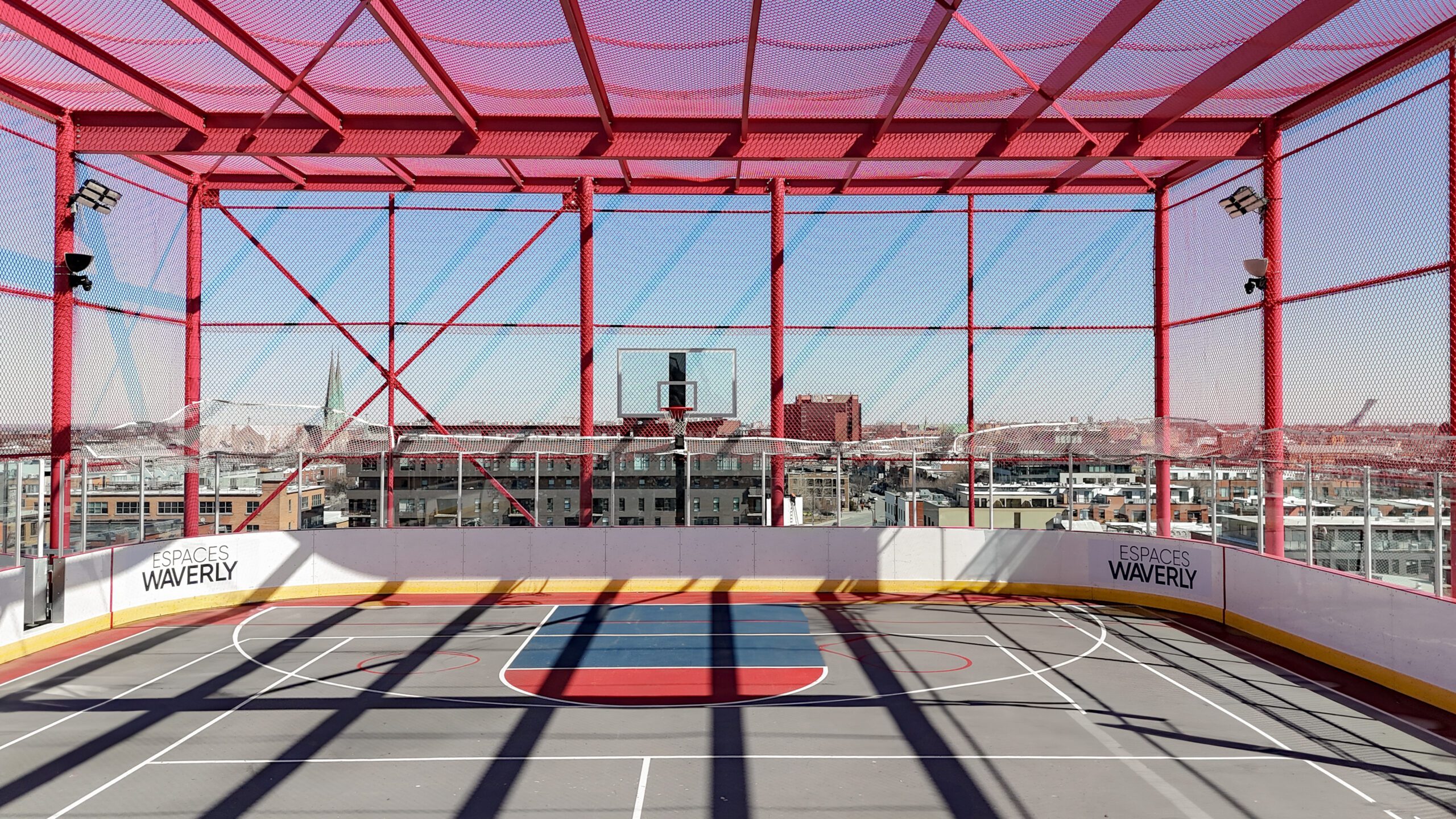
In a traditional environment where employees often remain sedentary, it is difficult to break this cycle. But in a space like Espaces Waverly, where users have access to a multisport rooftop, bright areas, and spaces designed to encourage natural movement, the transition becomes much simpler and more intuitive.
Why movement promotes creativity
Creativity doesn’t often emerge when you’re sitting still in front of a screen. Most great innovators—writers, scientists, entrepreneurs—talk about how their best ideas came to them during long walks. And that’s no coincidence. Movement, even moderate movement, promotes divergent thinking, i.e., the ability to generate several new ideas rather than a single linear solution.
By changing your environment, stimulating your body, and activating different senses, you activate different areas of the brain. A walking meeting or an informal discussion on the rooftop can spark more ideas than an hour spent in a closed room. Simply standing up, stretching, or changing position can improve the flow of thoughts.
Flexible spaces that allow for this diversity of environments—sit-stand workstations, abundant natural light, social areas, sports facilities—are therefore a natural springboard for creativity. They open the door to more spontaneous exchanges, different perspectives, and new ideas.
How movement influences team cohesion and communication
Well-being is not limited to individual performance. Shared physical activities—even very light ones—have a profound impact on team dynamics. Social neuroscience shows that moving together naturally strengthens emotional synchronization, improves communication, and creates a sense of belonging.
A simple game of pickleball on a rooftop, a yoga session, or a small sporting challenge between colleagues can create stronger bonds than many formal meetings. These activities break down the usual hierarchy, open up communication, and create shared memories that foster a strong team spirit.
In environments such as Espaces Waverly, where companies can organize team-building activities directly on site, these interactions become even more natural. They don’t require complex logistics—it only takes a few minutes to bring employees together and create a positive dynamic.
The importance of varying postures and environments
Movement is not limited to sports. It also involves varying your posture and environment. A day spent entirely sitting down is no more productive than a day spent standing up. Experts recommend alternating between sitting, standing, walking, stretching, and relaxing.
A space that offers several areas—traditional workstations, high tables, lounge areas, bright spaces, outdoor rooftop—naturally provides this possibility. You can change your environment depending on the task at hand, your energy level, or your need for concentration.
This flexibility improves circulation, reduces mental fatigue, increases engagement, and, above all, breaks the monotony. In a traditional office, this variety does not exist; but in a space like Waverly, it is part of everyday life.
A concrete example: how a space like Espaces Waverly facilitates movement
Espaces Waverly perfectly embodies this new approach to work. With a rooftop multisport court, bright flexible spaces, and multiple areas where people can move around freely, the space encourages movement in a natural, unforced way. Rather than just working, teams can:
-
play a quick game on the rooftop during a break
-
walk to brainstorm an idea
-
change spaces according to their mood or energy level
-
use a variety of workstations that encourage changing positions
-
enjoy a bright environment that naturally makes you want to move
This setup creates an environment where well-being is not an “added activity,” but an integral part of everyday working life.
Practical tips for incorporating 10–15 minutes of movement into your daily routine
Even in a supportive environment, some people find it difficult to incorporate exercise into their daily routine. Here are some simple and effective strategies:
-
Get up every 45 minutes to walk for at least 2–3 minutes.
-
take the stairs whenever possible
-
hold a standing or walking meeting
-
use the rooftop for a 5-minute active break
-
do simple stretches at your workstation
-
alternate between sitting and standing positions
-
do some light exercise with a coworker during a break
-
use open spaces to walk and think
These micro-habits greatly improve energy, focus, and motivation.
How movement influences employee retention and satisfaction
A healthier team is a more engaged team. Today’s employees are looking for flexibility, well-being, and an environment that supports them in their professional and personal lives. A space that encourages movement becomes a powerful tool for attracting and retaining talent.
Many organizations notice that their teams:
-
feel more energetic
-
work better together
-
have better communication
-
feel less stress
-
are absent less often
-
show better overall morale
Companies that focus on dynamic and flexible environments often see a natural improvement in productivity without having to impose strict measures.
Towards a more humane, flexible, and active future of work
Movement is not a trend; it is a necessity. The offices of the future will be designed not for employees to remain stationary, but to move, interact, breathe, and naturally find the right rhythm for working.
Espaces Waverly is at the heart of this evolution, offering an environment where well-being and performance coexist harmoniously. In a world where employees want to feel supported, understood, and motivated, providing a space that encourages movement is a major strategic advantage.
The future of work is not only digital: it is human, vibrant, and dynamic. And it starts with a simple action: moving.