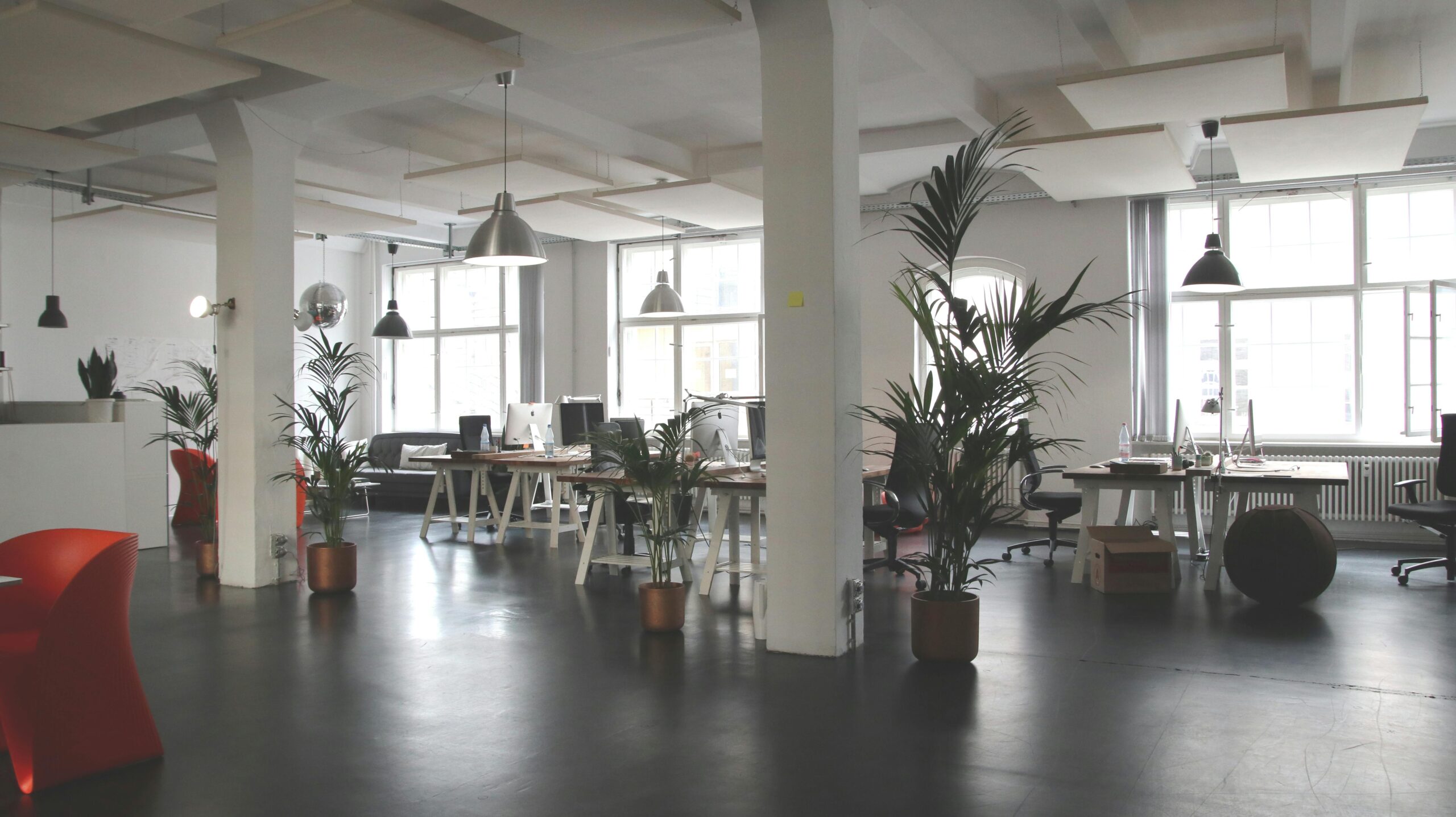
The world of work has changed profoundly in recent years. What was once considered an advantage—such as flexibility, remote working, or access to shared space—has become the norm for a large number of companies. In 2026, these transformations are intensifying. The traditional office as we knew it is giving way to hybrid environments that are more human, more flexible, and more focused on well-being and performance.
Coworking, once reserved for freelancers and startups, is now attracting small and medium-sized businesses, large corporations, and even government organizations that are rethinking their real estate strategy. Given this rapid evolution, one question arises: what will workspaces look like in 2026 and beyond?
This article explores the major trends shaping the future of work, coworking, and offices, and highlights what companies need to anticipate in a professional world that is more dynamic than ever.
Work hybridization is becoming the dominant norm
Hybrid working is no longer up for debate: it has become the preferred model for the vast majority of employees and a growing number of companies. Organizations understand that flexibility is not just a social demand, but a performance strategy. Employees want to be able to choose when they work from home, when they go to the office, and when they need a neutral and inspiring environment.
In 2026, hybrid models become even more structured. Companies adopt flexible policies that allow for autonomy while providing a clear framework. The office is no longer the place where you “have to be,” but a place where you come to collaborate, create, focus, or recharge.
Coworking spaces such as Espaces Waverly are at the heart of this transformation. They offer an adaptable environment that can accommodate mobile teams, one-off meetings, and companies that no longer need a traditional commercial lease.
Decentralization of offices: the end of the single headquarters
Another strong trend in 2026 is decentralization. Companies are gradually abandoning the idea of a single headquarters located in a dense city center. Instead, they are adopting a distributed model consisting of several small hubs located in strategic neighborhoods.
This model, sometimes referred to as “hub-and-spoke,” reduces travel times, brings offices closer to the communities where employees live, and offers greater flexibility. Coworking spaces play a central role in this transformation, as they offer comprehensive, turnkey infrastructure without heavy commitments.
Companies can rent dedicated space for their team a few days a week, organize monthly meetings, or enjoy a professional environment without making a long-term real estate investment. It’s a flexible and cost-effective solution that reflects changing business needs.
The growing importance of well-being at work
By 2026, well-being will become a key factor in attracting and retaining talent. Employees will expect work environments that support their mental, physical, and emotional health.
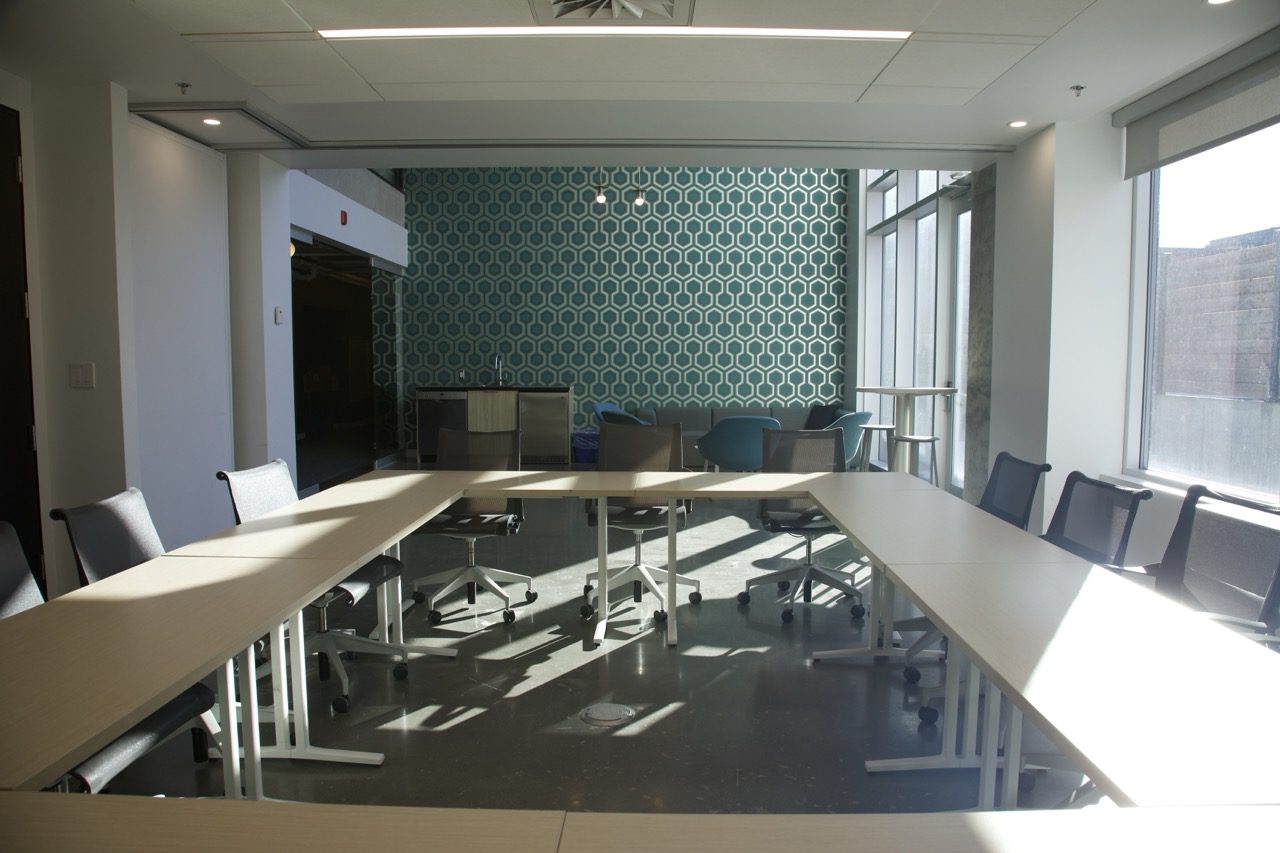
The offices of the future therefore incorporate elements that promote comfort, natural light, movement, quiet areas for concentration, and informal spaces for socializing. The presence of sports facilities, outdoor spaces, or relaxation areas is becoming a differentiating factor.
Companies now understand that well-being is not a “bonus”; it is an essential foundation for performance. Employees who feel good in their environment work better, collaborate better, and remain more engaged. This explains the rise of flexible spaces such as Espaces Waverly, which combine bright spaces, access to sports facilities, and a multitude of environments adapted to the varied needs of teams.
The rise of flexible offices at the expense of traditional leases
Traditional commercial leases are losing popularity. Their rigidity, duration, and cost no longer reflect the reality of post-pandemic businesses. In 2026, organizations are seeking more agile, scalable, and less restrictive solutions.
Flexible offices directly address this need. Companies can adapt their space according to their growth, team structure, or projects without having to commit to a five- to ten-year lease. They can test new markets, open temporary branches, or reduce their space easily.
Spaces such as Espaces Waverly offer exactly this flexibility: the option to rent an office, event space, or collaborative environment on a short- or medium-term basis, with all technology and services included. Companies no longer need to manage maintenance, repairs, layout, or building management—everything is taken care of.
The evolution of space design to encourage collaboration and creativity
The design of offices in 2026 will focus on people. Gone are the rows of closed offices, dark conference rooms, and monolithic spaces. Make way for modular, naturally lit, open, and welcoming environments.
The offices include:
-
multiple atmospheres depending on needs (focus, collaboration, relaxation, ideation)
-
informal spaces that encourage spontaneous exchanges
-
sit-stand or ergonomic workstations
-
quiet areas
-
multisensory environments (plants, textures, natural light)
-
accessible outdoor spaces
This diversity is essential in order to accommodate a variety of tasks and personalities. Some people work better in a quiet, isolated space; others need a stimulating environment; some alternate between several areas depending on their energy levels at the time.
Espaces Waverly already embodies this vision: a fluid, bright, modular layout that allows you to easily switch from a meeting room to a lounge area, from a closed office to a rooftop gym. This type of approach is becoming the benchmark for modern performance.
The rise of multisport environments and the integration of movement into the workplace
With the rise of well-being at work, companies are increasingly looking for environments that encourage movement. Sedentary lifestyles are recognized as a major health risk factor. By 2026, integrating sport and movement will therefore be an integral part of modern office design.
Multifunctional rooms, corporate gyms, rooftop sports facilities, active relaxation areas, and integrated health programs are becoming increasingly common. Employees can engage in short activities between meetings, participate in yoga sessions, or even organize team sports challenges.
Espaces Waverly, with its rooftop multisport court, perfectly illustrates this trend. Movement becomes a tool for productivity, well-being, and social cohesion.
The growing use of technology to enrich the work experience
Technology continues to play a major role in 2026, but it is integrated in a more intuitive and seamless way. Offices are adopting smart solutions that improve the daily lives of teams:
-
fully equipped meeting rooms
-
keyless access
-
space management via application
-
remote collaboration tools
-
sensors to optimize brightness or air quality
-
systèmes de visioconférence avancés
Technology should be invisible and serve people. It should not complicate daily life, but simplify it. Flexible spaces such as Espaces Waverly, which already incorporate several cutting-edge technologies, are responding to this growing demand.
The role of events in the “office + community” mix
A major trend for 2026 is the integration of events within the workplace itself. Companies are looking to create experiences that strengthen cohesion and promote a sense of belonging. After-work gatherings, workshops, conferences, sports classes, team meetings, and themed activities are becoming tools for engaging employees.
Flexible spaces designed for events stand out. They allow companies to organize events without having to rent an external venue or manage complicated logistics.
Espaces Waverly, with its modular spaces, rooftop, and collaborative areas, provides the ideal environment to foster this community culture.
The importance of local environments rooted in their neighborhoods
In 2026, the “office of destination” will give way to the “community-integrated office.” Employees want to work in an accessible location, close to shops, cafes, transportation, and living spaces.
Coworking spaces located in dynamic, lively, and well-connected neighborhoods—such as Espaces Waverly—are more attractive because they fit naturally into the life of the neighborhood. Companies understand that the work experience is not limited to the building, but to everything around it.
The rise of remote work and distributed teams
Companies are increasingly structured around distributed teams. Some employees work from home, others travel, and others are based in different cities. In 2026, this trend will intensify.
Offices are therefore becoming flexible anchor points rather than daily obligations. The goal is no longer to have everyone in the same place at the same time, but to provide a meaningful space for important moments—monthly meetings, workshops, collaborations, client meetings, and team events.
Coworking spaces facilitate this fluidity thanks to ad hoc access, bookable meeting rooms, and services designed for mobile teams.
Towards spaces that prioritize people, flexibility, and community
In 2026, the future of work will be based on three pillars:
-
flexibility
-
well-being
-
community
Companies are no longer just looking for an office; they are looking for an experience. They want to offer their teams an environment where they feel comfortable, where they can collaborate freely, where they can move around, think, create, and recharge their batteries.
Spaces such as Espaces Waverly embody this new vision: a multifunctional, bright, people-oriented space, rooted in a lively neighborhood and capable of accommodating businesses of all sizes.
The future of work is not set in stone; it evolves in line with human needs and societal changes. In 2026, the trend is clear: more flexible, active, well-designed, adaptive, and human-centered spaces.
And that is exactly what companies are looking for today.