
Finding the right location for your business in Montreal is a strategic decision that goes far beyond simply choosing a neighborhood. Your office address not only influences your company’s brand image, but also the satisfaction and productivity of your teams. In a constantly evolving market, where flexibility is becoming a priority for organizations, choosing a flexible office allows you to combine mobility, adaptability, and prestige—provided it is well located.
This article explores the main criteria to consider when choosing the ideal location for a flexible office in Montreal, based on the strengths of the local market and the specific characteristics of the city.
1. The strategic importance of location
The location of an office is not just a question of geography. It is a decision that affects the company’s overall strategy: visibility, recruitment, accessibility, employee quality of life, and attractiveness to customers.
In a city like Montreal, where each neighborhood has its own identity, choosing a location that reflects your values and corporate culture is essential. An office located in Mile End, for example, sends a different message than an office downtown or in Griffintown. The former evokes creativity and innovation, the latter proximity to major institutions and finance, and the third dynamism and youthfulness.
2. Accessibility and transportation: a key factor
The first question to ask yourself is: how will your employees and customers get there?
A good location should be easily accessible by various modes of transportation: subway, bus, bicycle, car, or even on foot. In Montreal, the public transit system connects most neighborhoods quickly, but some stand out for their connectivity.
-
Mile End and Plateau: very well served by major bus lines and close to the Laurier or Rosemont metro stations. Ideal for teams living on the island.
-
Downtown: ideal for businesses that regularly receive external clients, thanks to its proximity to the McGill, Bonaventure, and Peel subway stations and underground parking facilities.
-
Griffintown: slightly less accessible by subway, but very well served by buses and bike paths.
-
Rosemont and Petite-Patrie: a balance between accessibility, parking, and neighborhood atmosphere.
For a flexible office, this issue is all the more important as your employees may come in at varying times. A well-connected location facilitates rotation and encourages on-site presence.

3. The brand image associated with the neighborhood
Your company’s address acts as a showcase. It influences the perception of your partners, your customers, and even the future talent you want to recruit.
Each neighborhood in Montreal embodies a unique identity:
-
Mile End: a hub for creative businesses, start-ups, and agencies. The atmosphere is both professional and relaxed.
-
Griffintown: a symbol of urban renewal, with a touch of modernity and technology.
-
Downtown: prestige, institutions, large companies. The image there is more formal.
-
Rosemont–La Petite-Patrie: a balance between residential neighborhood and local dynamism. It offers a good mix of service, communication, and design businesses.
-
Old Montreal: historic charm, heritage buildings, tourist attraction.
Choosing the right neighborhood means choosing the image you want to project. A technology or creativity-focused company will benefit from setting up shop in an innovative environment like Mile End—home to Espaces Waverly, a space that combines architectural character and flexibility.
4. Employee well-being
Modern companies know that a good working environment extends beyond the office walls. The neighborhood in which you work influences employee well-being, motivation, and loyalty.
Factors such as proximity to cafes, restaurants, gyms, and green spaces make a significant difference to everyday life. Working in a lively and pleasant neighborhood improves quality of life and encourages collaboration outside of office hours.
Mile End is an excellent example of this balance: with its independent cafés, local restaurants, and galleries, it offers a stimulating and human atmosphere. For companies choosing flexible offices in this area, it is a major asset in attracting talented employees who are looking for an inspiring environment rather than just a place to work.
5. Flexible spaces and business growth
A company’s needs change rapidly: teams grow, hybrid working models emerge, new projects or mergers arise. Opting for a flexible office means anticipating these changes without being constrained by a long, rigid lease.
But flexibility only makes sense if it is backed by a strategic location. Choosing a dynamic neighborhood with good transport links guarantees stable rental value and potential for growth.
At Espaces Waverly, for example, businesses can adapt the size and configuration of their space to suit their needs. Whether you’re a fast-growing start-up or a well-established SME, the flexibility of the space—combined with its location in Mile End—allows you to evolve without friction.
6. Costs and real value
The cost of an office is not limited to the price per square meter. You also need to consider the added value of the location and the services included.
A flexible, all-inclusive space, such as Espaces Waverly, often offers greater profitability than a traditional office:
-
no maintenance costs,
-
no equipment to buy,
-
shared services (internet, maintenance, coffee, security, reception, etc.).
In addition, the location in an attractive neighborhood facilitates retention and recruitment, which represents a significant long-term saving.
Companies that choose a location based purely on price often end up paying in other ways—in lost time, motivation, or image.
7. Environment and sustainability
An increasingly important criterion: sustainability. Today’s young companies and talented individuals are looking for workspaces that are part of a responsible approach. This means proximity to active transportation, local services, and the renovation of existing buildings rather than new construction.
Espaces Waverly is part of this approach: the building, a former industrial warehouse, has been transformed into a modern, bright space, while retaining its original character. Choosing this type of environment is a statement of a sustainable and conscious vision—a criterion that is attracting more and more partners and employees.
8. The economic vitality of the neighborhood
The choice of location for a flexible office must also take into account the surrounding economic fabric. Working in a vibrant ecosystem promotes synergies, opportunities for collaboration, and networking.
In Mile End, the concentration of creative businesses, studios, start-ups, and agencies encourages encounters and exchanges. This environment attracts talent, ideas, and professional events.
Being part of such a neighborhood means enjoying a stimulating business community where collaborations arise naturally.
9. Complementary infrastructure
An ideal location offers much more than just an office: it provides a range of facilities that simplify business life.
This may include:
-
event spaces for organizing meetings, conferences, or launches;
-
relaxation or dining areas;
-
sports facilities to promote health in the workplace;
-
integrated services such as a café, kitchen, or catering service.
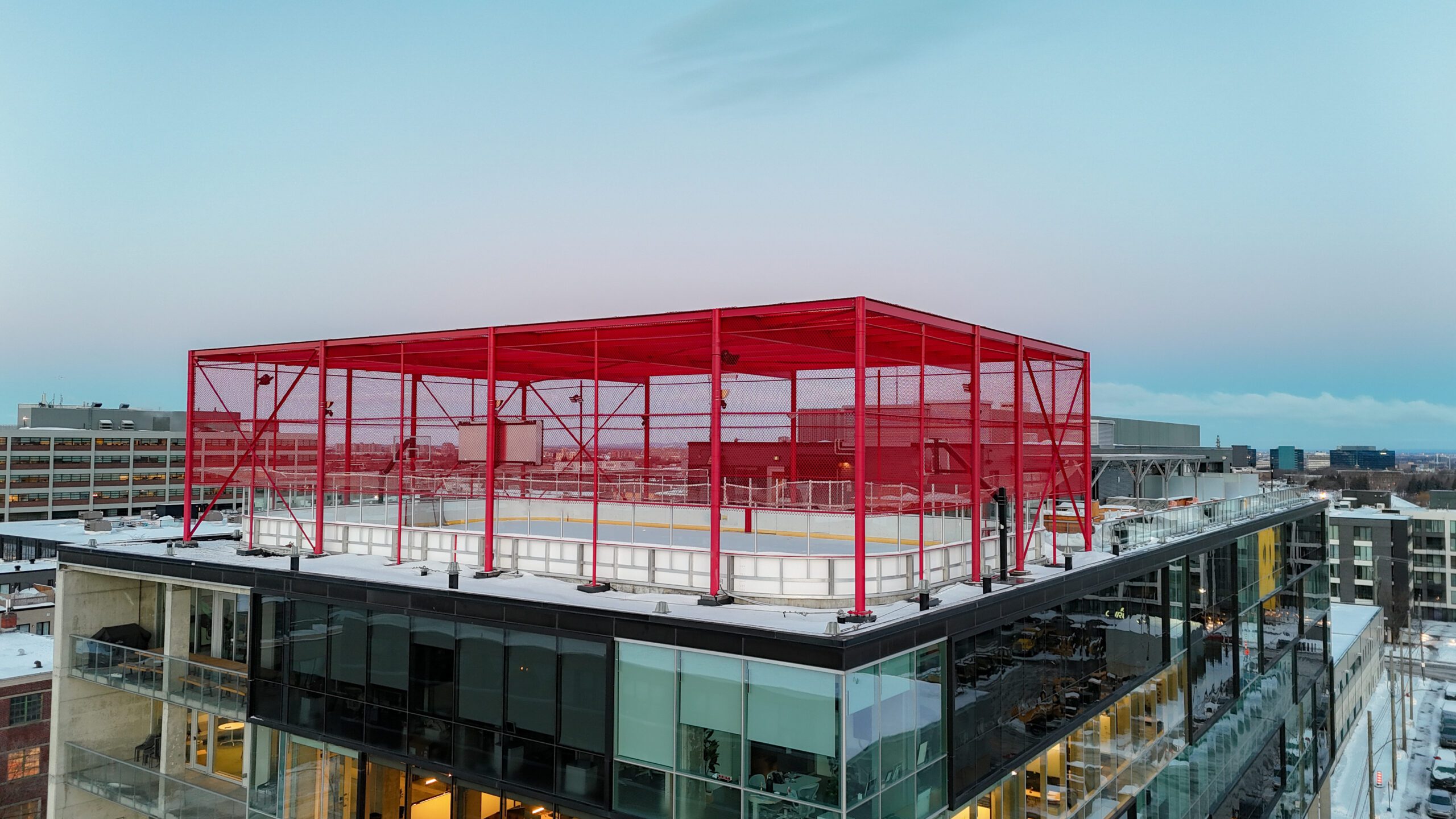
That’s exactly what Espaces Waverly offers: an all-in-one space where businesses can work, meet, eat, and even enjoy sports activities on the rooftop. This rare combination in Montreal makes it a strategic choice for modern businesses.
10. Geographic flexibility and intercity travel
If your employees or partners come from outside Montreal, the location should also be easily accessible from major highways or train stations.
A neighborhood like Mile End, close to downtown but away from the worst traffic congestion, offers a good compromise. It is easily accessible from the main highways, while still providing a pleasant working environment.
For businesses that welcome domestic or international clients, it is also useful to be close to hotel or temporary accommodation areas. Here again, the Waverly area offers this balance between accessibility and comfort.
11. The importance of community
Flexible spaces also stand out for their ability to create community. Location plays a big part in this: it attracts a certain type of business and encourages specific interactions.
At Espaces Waverly, community is at the heart of the concept: creative businesses, independent professionals, and organizations that value collaboration and the sharing of ideas. The Mile End neighborhood, known for its entrepreneurial spirit and open culture, reinforces this networking effect.
Choosing an office in such an environment also means joining an inspiring ecosystem.
12. Conclusion: a choice that is both rational and emotional
Choosing the ideal location for your flexible office in Montreal is not just a matter of technical criteria. It is a decision that must align strategy, image, accessibility, and well-being.
A good location should inspire confidence in your customers, motivate your employees, and support your business objectives.
Montreal offers a diversity of neighborhoods that allow every business to find its balance. Mile End, with its unique blend of creativity, accessibility, and dynamism, perfectly embodies the spirit of modern workspaces.
With this in mind, Espaces Waverly has designed its offering: a flexible, well-located, inspiring, and functional space, designed to meet the needs of businesses today and tomorrow.